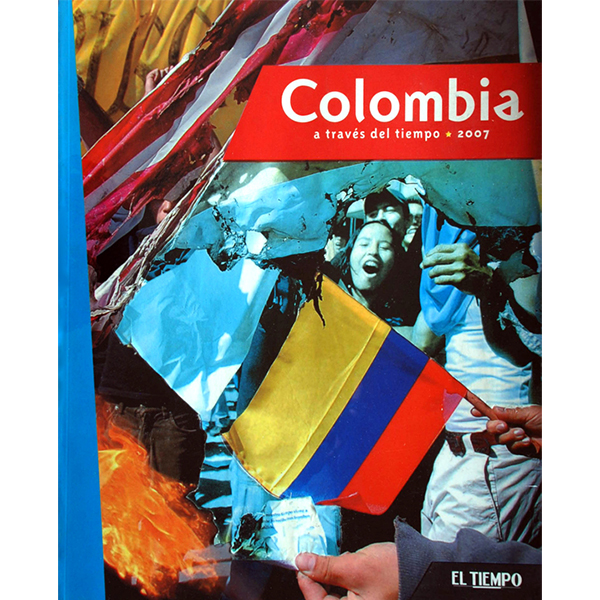
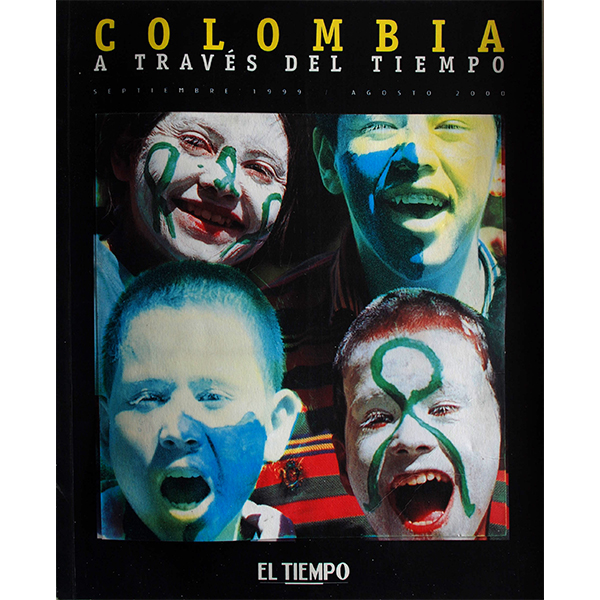
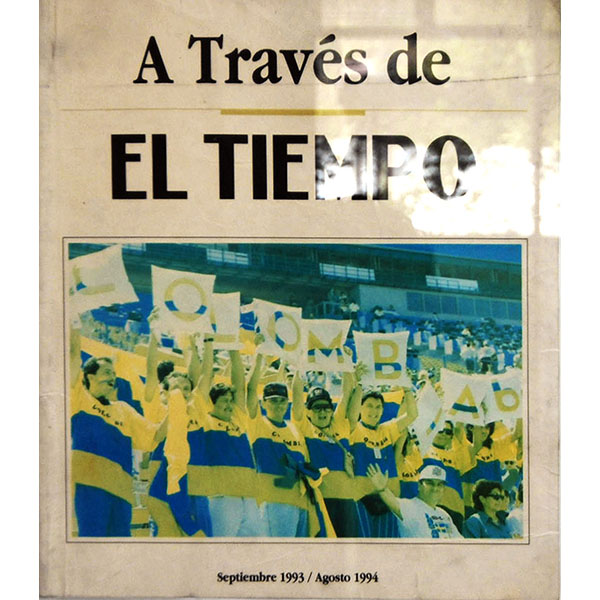
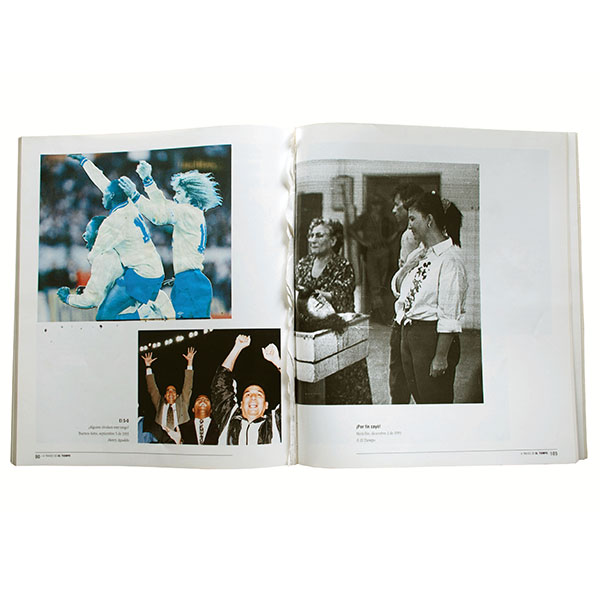
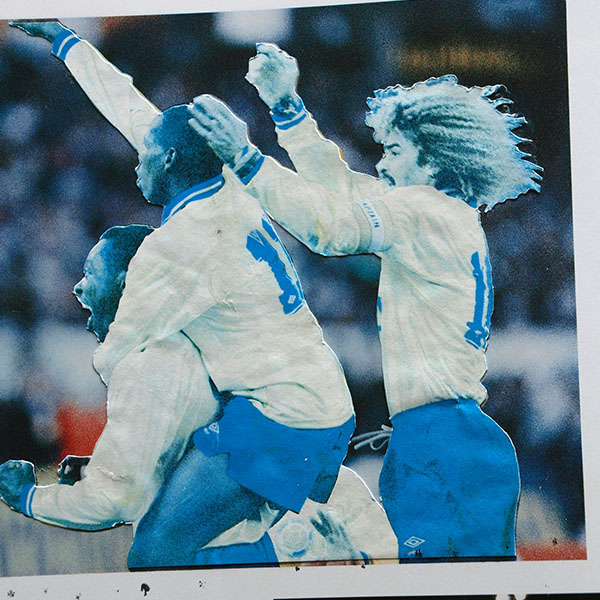
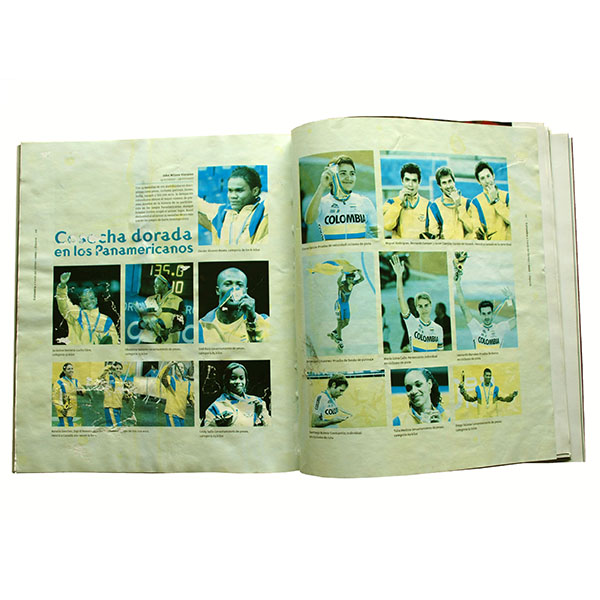
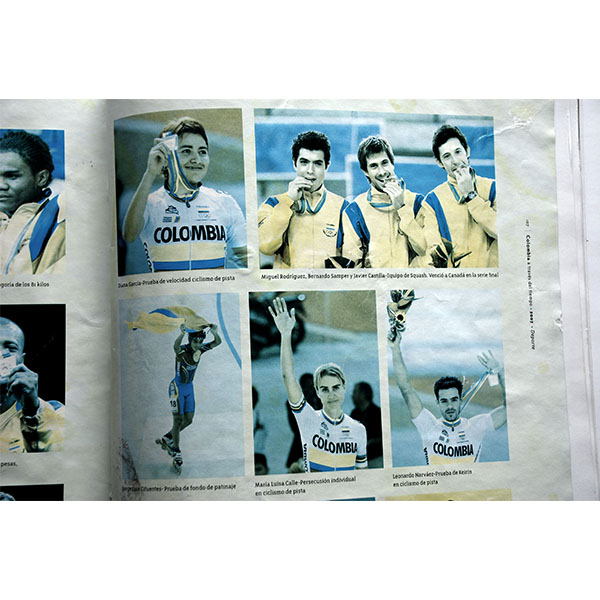
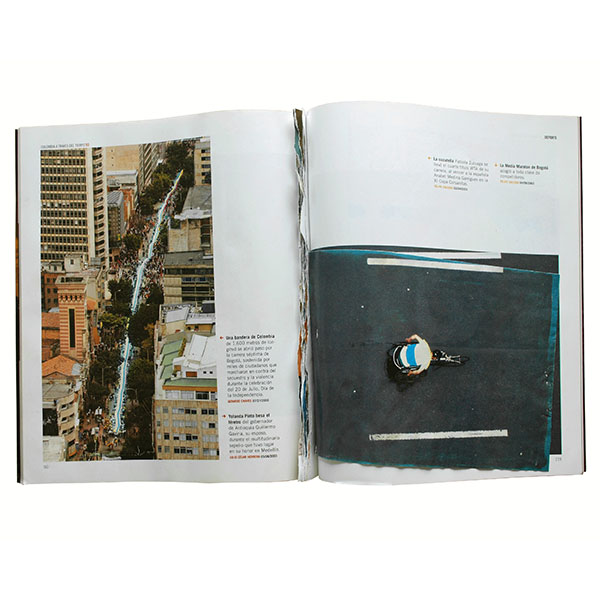
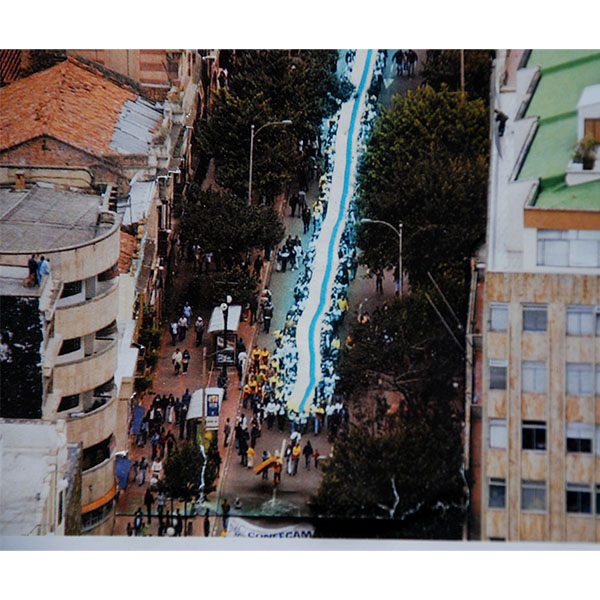


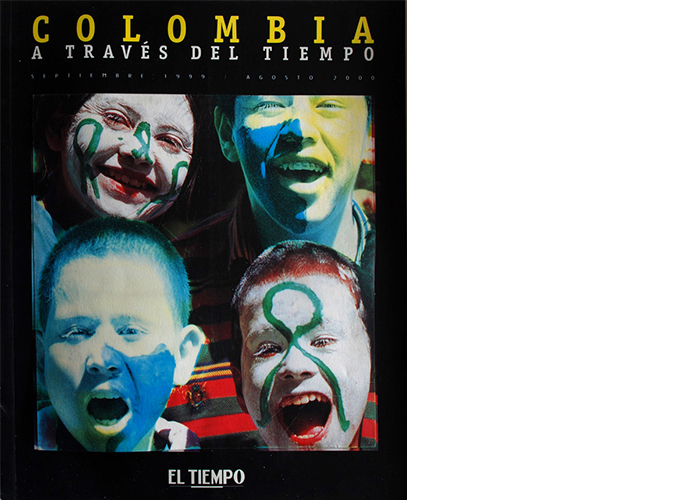
Rather than an archive, the touristic condition is a rescue exercise focused on the visual splendor accompanying advertising products. A collection of re-discoveries, brought up from the imagery index implemented by the state to commercially re-draw the consensus on patriotic ideals, national identities, and the territorial ethos in the tone of propaganda. The installation responds to the instrumentalization of folklore, which establishes the visual culture’s script set in motion since the cold war.
This collection groups images from the recent past, replaced by the accelerated production of a renewed iconography. This attention configures a collection with a worn-out appearance, which reviews the technical and ideological renovation that gives rise to the emergence of the country brand, deployed from a supposed officialism, in which the state works as an advertising agency.
The piece focuses on materials over imagery; media over the content. Prints, papers, old magazines, and obsolete videos that were stranded on the periphery of the representation system, performing solely as referents. Because of their degraded look, they quote the statute of ruins, which turns a symbol into rubbish within capitalism.
Thus, everything in this installation was recovered from the drawer or the personal archive of some celebrity, from a monument to the memory of past glories in some city, from commercial brands valorized in their nostalgia, or from photographic compositions that are naively obvious but seem barely invented, in short, everything rescued from store walls or private collections of objects without use and a sense of the present.
Old material, soft history, ruins without status, discarded iconography. Images victims of the speed of the latest advertising update campaign. They are talking together, no longer of their time but of ours, pathetically commenting on the structure that hopes to consolidate the concept of «us» without challenging it.
The prints and publications were subjected to sunlight to gain the degraded aspect of old analogous lithographic ink; therefore, these images, and the icons that support them, end up being the testimony of time passing by in showcases or walls, and in which the gaze tries to update the meaning of the new visual forms that struggle to define one’s own identity in contrast to obsolete referents.
The characters, products, and landscapes depicted in the Touristic condition are remnants from the 80s and 90s, troubled times in an ashamed country that allowed milestones that could grant some dignity. In the end, the values and virtues those icons represented aged as all products do. Since, in any supply and demand system, the public always requires new commodities to rekindle desire, identity was not to be left behind.